
Our principles
At HOH, team training and skills classes share one programme. Players learn a skill, read the situation and use it in a game. Coaches adapt the challenge to each group and keep the same language, so players build on what they already know as they move between sessions and teams.
Team training builds how your child plays with others: decisions, spacing, defence and communication. Skills classes build what they can do with the ball. Each week the two share a focus.
Learn it. Read it. Play it.
Every skill moves through three steps, using one example: passing ahead to a teammate on the run.
- Learn it
- The pattern with little pressure, so players know what good looks like. Pass ahead to a runner in an open lane.
- Read it
- A defender changes what happens, so players have to see it and decide. In a 2-on-1, the defender chooses who to stop and the ball goes to the open player.
- Play it
- The skill inside a real game, with a scoring rule that rewards it. A fast-break layup counts double.
Some drills look messy because players are adapting to a defender or an unfamiliar situation. That is part of the practice: learn the movement, then work out when and how to use it.
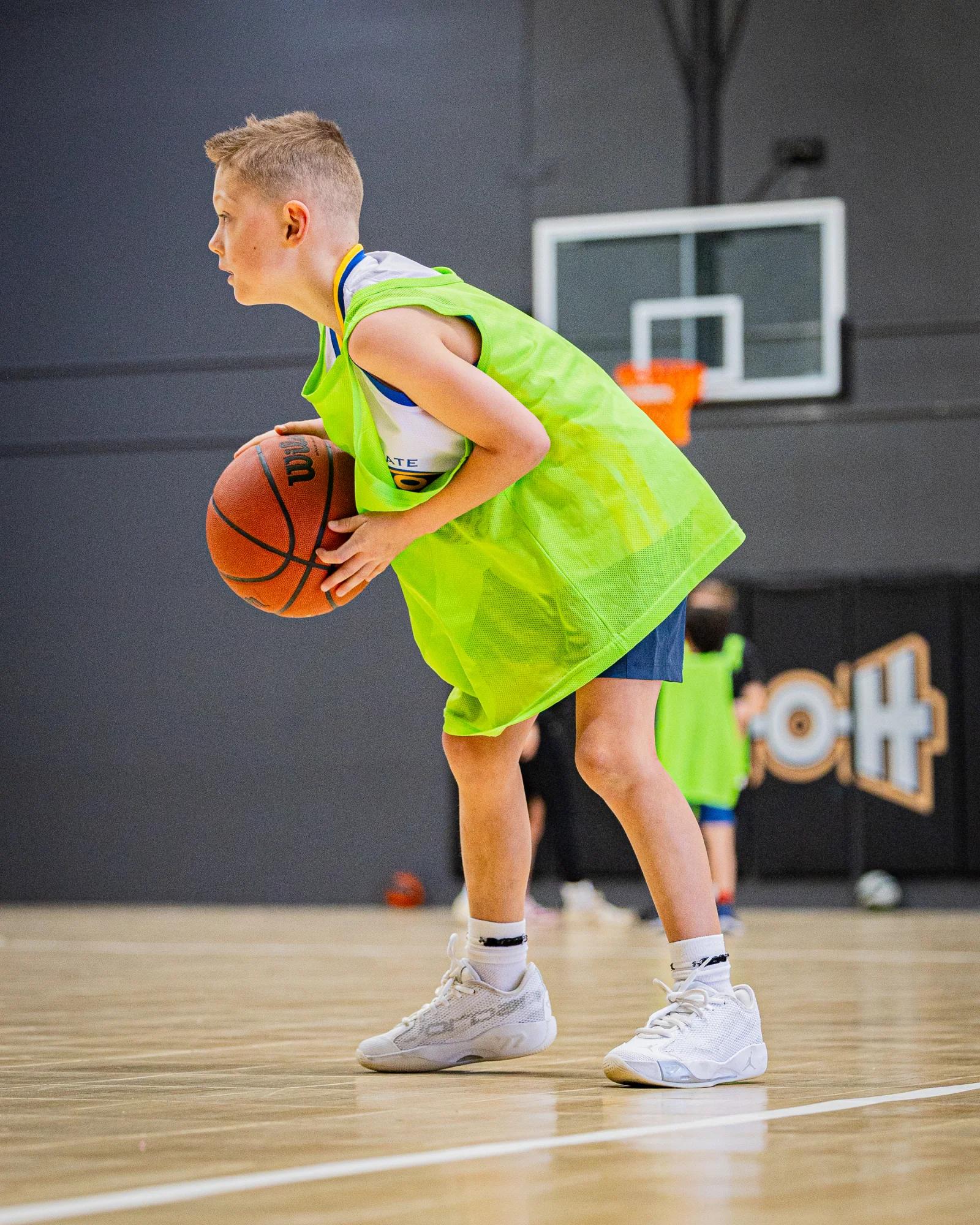 Photo 13
How we coach
- Short demonstrations, then players get moving. Corrections come once they have felt the drill.
- Lots of repetitions and short queues, so players spend their time touching the ball.
- Coaches change the game rather than give a speech: a scoring rule, the space or the numbers.
- Questions instead of lectures. “What did you see?” “Was there a better shot?”
- A brave try at the right play is praised, made or missed. A wrong decision is better than no decision.
- Each session closes with a reflection and something to practise at home.
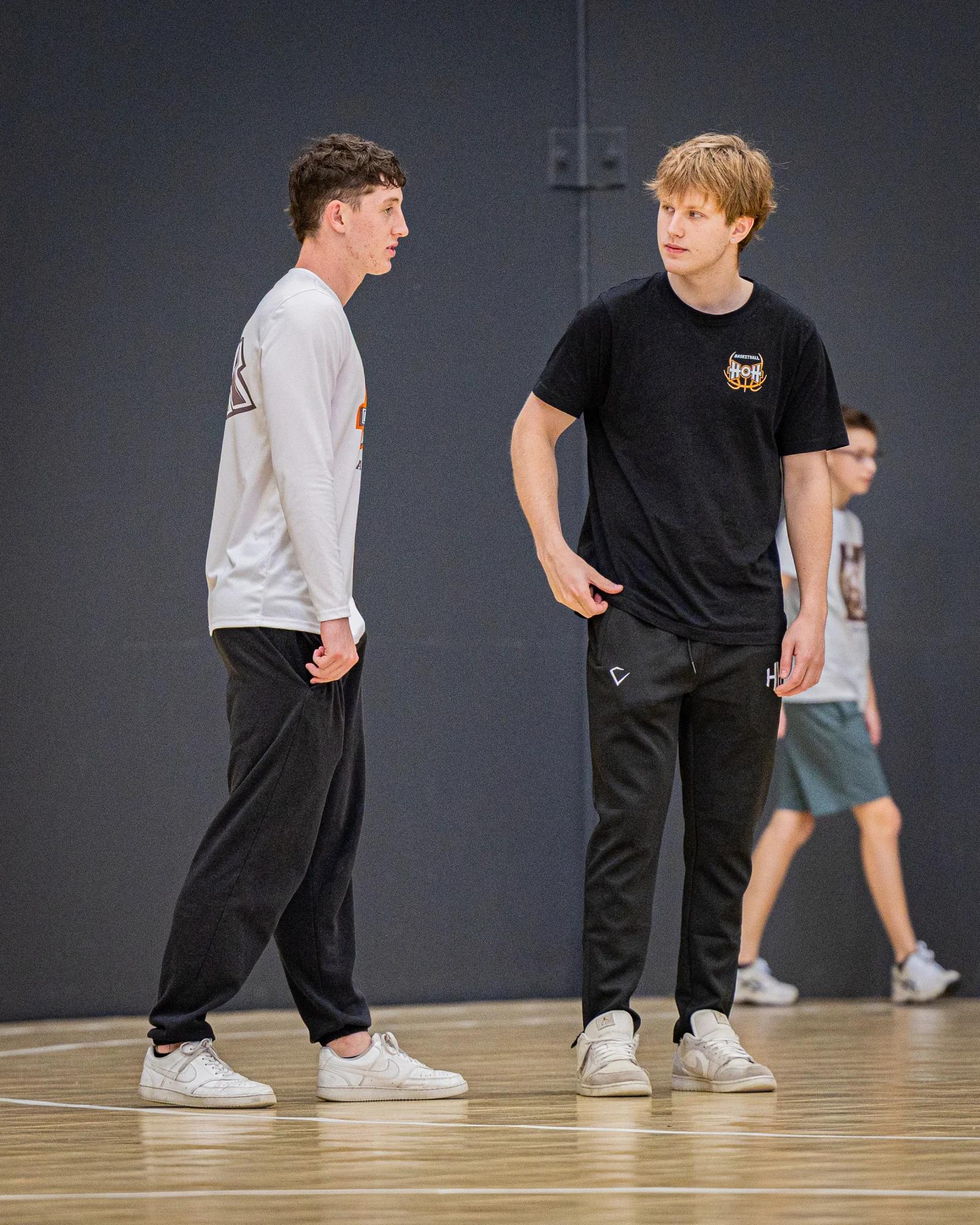 Photo 12
Mindset is coached too
Each week has a mindset theme, raised in the opening huddle and the close. Younger players learn the same ideas through play.
- Self-awareness
- I know my strengths and my next step.
- Self-confidence
- I can try, learn and improve.
- Understanding team
- I help my team succeed.
- Pressure and emotions
- I can feel pressure and choose my response.
- Reset and respond
- The next useful action is mine.
- Taking ownership
- I own my progress and know who can help.
After a mistake, players use a three-step reset: breathe, say a cue word such as “Next play”, then take the next action.
Development over results
Players are placed where they can learn now. Effort, decisions and teamwork count as much as the scoreboard.
Goals stay within a player’s control: effort, habits and skills, not results or selection. Players name their strengths, choose a next step and review it with their coach.
The 2-2-1
Training and games finish with a player-led 2-2-1: two things the team did well, two teammates who stood out and why, and one thing to improve. Players lead it; coaches listen.
How parents can help
On the sideline
- Cheer effort, hustle and good play from either team.
- Say “Next play!” after a mistake, and leave the coaching to the coach.
- Respect referees, many of whom are young people learning too.
- Raise concerns privately with the club, not in a group chat or on social media.
On the way home
- What was the most fun part today?
- What did your coach want you to work on?
- Who played well on your team?
Skip the replay of every mistake, comparisons with teammates or siblings, and talk about selection or minutes in front of them.
See it for yourself
A free trial is the easiest way to see how a session runs.
Book a free trialTalk to the club